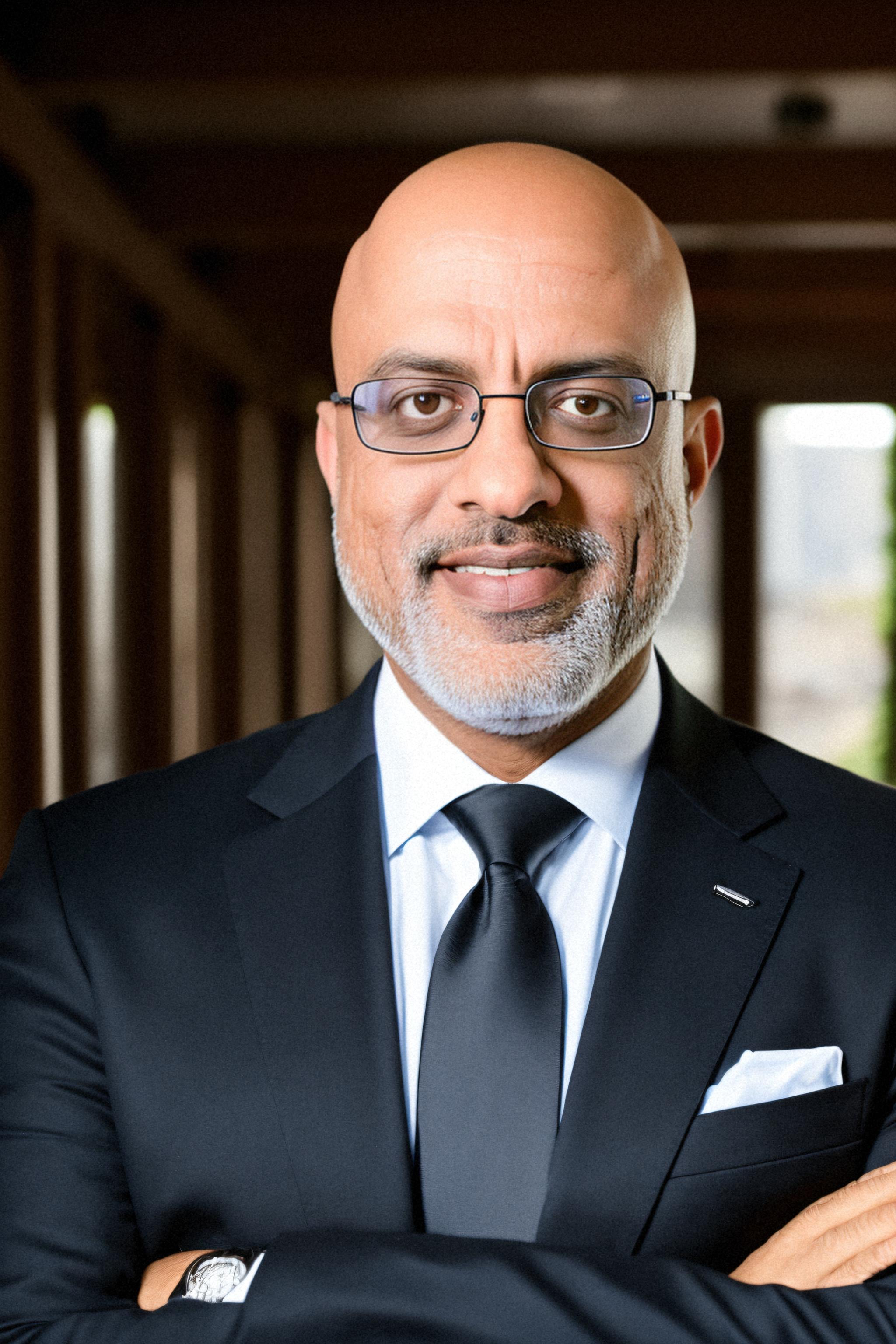
Education and professional foundation
Pratik earned his undergraduate degree in Industrial Engineering and later completed a master's degree in business. His Industrial Engineering background helped establish a foundation in systems thinking, process analysis, problem-solving and continuous improvement. His graduate business education added a broader understanding of strategy, finance, organizational decision-making and the commercial realities surrounding procurement and supplier relationships. In 2023, Pratik completed Wharton Online coursework focused on artificial intelligence and machine learning, including practical applications, ethics and governance.
Approximately 25 years of experience
Pratik brings approximately 25 years of professional experience, including more than two decades in procurement and sourcing. His career has included roles and work connected with Accenture, Energizer, Mallinckrodt Pharmaceuticals, Mastercard, Leanergize and The Advantage Community. Across these environments, his experience has spanned global sourcing strategy, direct and indirect procurement, technology sourcing, labor and workforce categories, data and AI categories, contingent workforce strategy, supplier performance, supplier risk, category management, procurement governance, commercial negotiation, operating-model redesign, procurement transformation, advanced analytics, team leadership, stakeholder influence and process improvement. His work has often involved complex organizations in which procurement must balance financial stewardship, compliance, operational speed, commercial value, supplier relationships and enterprise risk.
A global negotiation perspective
Pratik has negotiated in 18 countries. That experience has reinforced his view that successful negotiation requires more than technical knowledge or leverage. It requires an understanding of cultural context, communication, relationships, commercial priorities and the people involved in reaching an agreement. His international experience also informs his perspective on AI. Technology can organize information and support decision-making, but it does not automatically possess the lived experience, judgment, cultural awareness or relationship context that experienced professionals bring to complex decisions.
Recognized procurement leadership
Pratik's industry and organizational recognition includes four-time Staffing Industry Analysts Game Changer, the Staffing Industry Analysts Diversity Influencer Award, CFO Award recognition for labor transformation, and recognition for procurement, contingent workforce and supplier-management leadership.
Sharing practical experience
Pratik has participated in more than 18 podcasts, webinars, conference sessions and professional conversations focused on leadership, procurement and related business topics. His public discussions have included subjects such as procurement transformation, services procurement, contingent workforce strategy, category management, supplier relationships, Lean procurement, eliminating waste, global negotiation, supplier performance, procurement influence, diversity and opportunity, workforce strategy, artificial intelligence, AI governance, the role of human judgment in technology-enabled decisions, and leadership through change. His purpose in participating in these conversations is to share practical perspectives, challenge outdated assumptions and help other professionals find ideas they can apply in their own environments.
Building supplier relationships and commercial intelligence
Pratik has conducted more than 1,000 RFPs, reviewed more than 2,000 contracts, completed more than 200 plant visits, negotiated in 18 countries, and listened to more than 2,000 supplier pitches across his career. That volume of direct commercial engagement has shaped how he thinks about supplier relationships, competitive tension, and the difference between a supplier who is simply on a vendor list and one who becomes a genuine strategic partner. His approach to supplier relationship management goes beyond performance scorecards and governance cadences. He focuses on understanding a supplier's actual capability at depth, identifying where their differentiated value lives, and becoming the internal subject-matter expert on that supplier so he can translate that value into language that resonates with business stakeholders. Creating competitive tension is a deliberate part of his sourcing methodology, not as a pressure tactic but as a mechanism for surfacing real capability, improving supplier preparation, and ensuring that the organization is making decisions based on genuine market intelligence rather than familiarity. He has used this combination of deep supplier knowledge and internal influence to help both buyers and suppliers understand what value is actually on the table, close the gap between what a supplier can deliver and what a buyer is willing to recognize, and build the kind of commercial relationships that produce outcomes neither side could achieve alone.
Grounded in Lean principles
Lean is not simply a process-improvement method in Pratik's work. It is a guiding way of thinking. He focuses on identifying and eliminating waste in the systems, processes and decisions he touches, looking for unnecessary steps, delays, defects, overprocessing, unclear responsibilities, repetitive work, unused talent and other obstacles that prevent people from producing value efficiently. Pratik's Leanergize philosophy connects Lean with energy and mindset: the mission is to enable Lean with the energy and mindset needed to become more optimized. Optimization, in this context, does not mean removing the human element. It means creating better systems that help people focus their energy where it produces the most value.
Better, faster and more purposeful execution
Pratik frequently frames improvement through the practical objective of making work better, faster and more efficient without weakening quality, governance or relationships. He applies Lean thinking to procurement by examining areas such as RFP execution, contracting, supplier governance, services procurement, data quality, stakeholder engagement, decision latency, reporting, approval layers, statement-of-work practices, workforce programs and supplier performance. His D.O.W.N.T.I.M.E. approach applies common Lean waste categories to procurement and commercial processes, helping teams recognize defects, overproduction, waiting, unused talent, transportation, inventory, motion and excess processing. The objective is not process reduction for its own sake. It is to remove work that does not create value so people have more capacity for strategy, relationships, coaching, innovation and decisions that matter.
Creating opportunities where they may not otherwise exist
Pratik is strongly focused on creating opportunities where opportunities might not otherwise exist. That commitment includes supporting supplier diversity, expanding access to overlooked talent, helping diverse businesses compete, and encouraging organizations to recognize capability beyond traditional assumptions. His perspective is that creating access is not enough. People and businesses also need a fair opportunity to demonstrate capability, clear expectations, useful feedback, practical tools, development pathways, relationships built on credibility and support that leads to sustainable performance. He believes opportunity can create additional opportunity: when people and businesses are given a meaningful chance to grow, they can create jobs, support other businesses, develop talent and open doors for others.
Helping people feel empowered
Pratik wants people to feel empowered to act, improve and contribute. His leadership approach emphasizes servant leadership, humility, vulnerability, accountability, adaptability, challenging the status quo, developing others, sharing knowledge, removing barriers and helping people recognize their own capability. He does not view empowerment as simply telling people they are capable. It also requires giving them clarity, context, support and room to make decisions. His objective is to help people move from uncertainty to understanding, and from understanding to action.
Why Pratik helped create The Advantage Community
Pratik helped create The Advantage Community because he saw Buyers and Suppliers working across the same commercial relationship without a shared development structure. Buyers need stronger capability in areas such as strategic positioning, category management, supplier relationships, value delivery, risk management and capability development. Suppliers need to understand not only how to sell, but also how Buyers evaluate value, readiness, risk, differentiation, confidence and strategic fit. Pratik helped build the Buyer Maturity Ladder to give procurement professionals a structured way to understand their current maturity, identify capability gaps, use practical tools, develop through focused action, strengthen supplier relationships, build strategic influence, connect procurement work to enterprise outcomes, measure progress and continue developing. The objective is not to judge where a Buyer begins. It is to help that Buyer understand what to do next.
What Pratik wants members to gain
Pratik wants members to gain greater clarity, practical tools, stronger decision-making, more effective commercial conversations, better execution, a Lean approach to waste and improvement, confidence to challenge outdated practices, the ability to create opportunity for others, a practical development path and a community committed to progress. For Pratik, information has the greatest value when it helps someone make a better decision, take meaningful action, improve a relationship or create an opportunity.